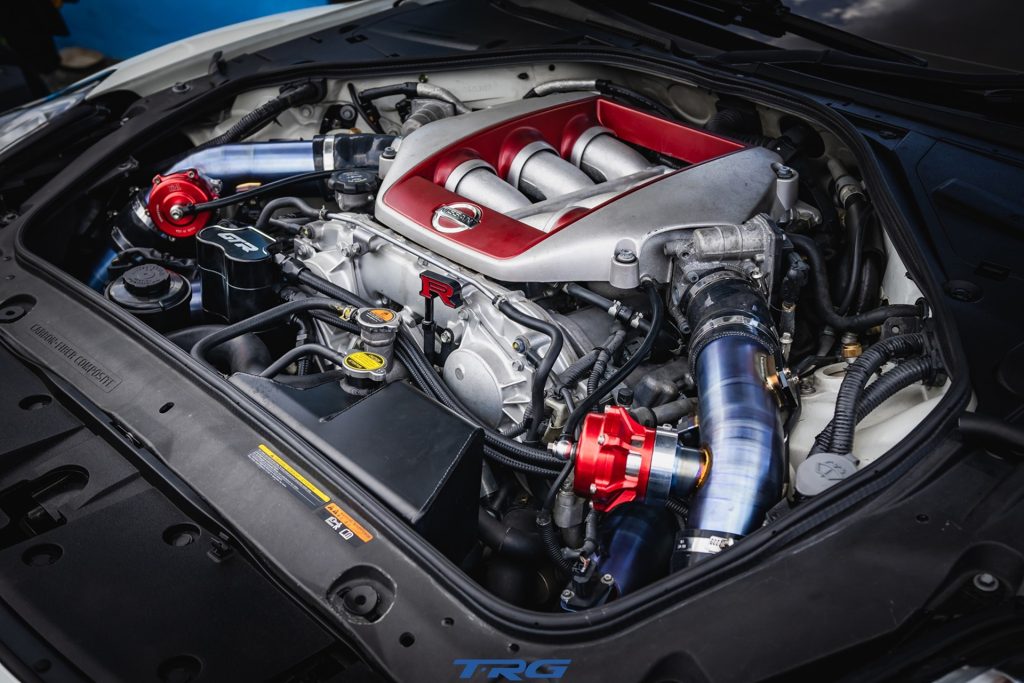
Stage 1 is software only on an otherwise stock car. Stage 2 adds breathing hardware, like intake, downpipe and exhaust, plus a matching tune. Stage 3 means major hardware, a bigger turbo, upgraded fuelling and sometimes internal engine work. Stage 2.5 sits in between, and some shops keep numbering well past 3.
Here is the catch. The stages themselves are not real. As a sports car tuning shop in Malaysia I hear the word every week, but no engineering textbook defines a Stage 2 car. Stages got invented so a workshop and a customer could match a budget to a horsepower goal. They are packages, not physics. Book a custom dyno tune and this is the conversation we’d have.
Stage 1: software only, everything else stock
The engine, turbo, intake and exhaust all stay factory. The only change is the ECU calibration, the software that decides how much boost, fuel and timing the engine runs. Modern turbo engines leave the factory detuned on purpose, carrying a safety margin for bad fuel, hot climates and skipped oil changes. A good Stage 1 tune takes back part of that margin. On many turbo petrol cars that lands around 15% to 30%, but the real number depends on the platform. No new parts, the car still passes as stock, and it suits a daily driver who wants a bit more shove.
Stage 2: bolt-on breathing plus a real tune
Stage 2 keeps the standard turbo but helps the engine breathe. The usual parts are a higher-flow intake, a downpipe (the pipe straight off the turbo, usually the biggest restriction) and a freer exhaust, with the tune rewritten around them.
This is where the “louder and faster” customer lands. The exhaust note changes, throttle response sharpens, the turbo spools quicker. A downpipe or intake without a fresh tune is half a job, because the factory software was never written for that airflow, so the car can run lean or throw fault codes. Every stage deserves a custom tune matched to that exact engine, not a file copied off another car.
Stage 2.5 usually means Stage 2 plus one more supporting part, an intercooler or a fuel pump, before the turbo gets touched.
Stage 3: turbo, fuelling and often the engine itself
Stage 3 stops being a bolt-on afternoon and becomes a build. The stock turbo comes off, a bigger one goes on. Fuelling usually needs upgrading too, larger injectors and often a bigger pump, because more boost means far more fuel. Depending on the platform, the internals (pistons, rods, sometimes the whole short block) may need strengthening to survive the extra cylinder pressure. On a GT-R, push hard enough and the GR6 dual-clutch gearbox becomes the next weak link. Once the turbo and fuelling have changed, only a custom tune on the dyno keeps the engine safe.
Nothing stops at 3 either. Past it, the numbering is just whatever a shop calls the next parts list. If you drive a GT-R and want the numbers and boost targets for that car, I’ve written that up in our GT-R stage guide.
Why “Stage 2” differs at every sports car tuning shop in Malaysia
Stages are not standardised. One workshop’s Stage 2 might be an intake and a downpipe. Another calls the identical package Stage 3, because their Stage 2 was just the tune. Both are “correct”, since the words mean whatever each shop decided.
So don’t shop by stage number, shop by parts list. When any performance car workshop quotes you a stage, ask what’s included and get the parts and the tune written down. That’s the only honest way to compare quotes.
Frequently asked questions
What is the difference between Stage 1, 2 and 3 tuning?
By common convention, Stage 1 is a software tune on an otherwise stock car, Stage 2 adds breathing hardware like an intake, downpipe and exhaust with a matching tune, and Stage 3 means major hardware such as a bigger turbo, upgraded fuelling and sometimes strengthened internals.
Are car tuning stages an official standard?
No. Stages were invented to make conversations between workshops and customers easier, not by any regulator or manufacturer. There is no fixed definition, so one shop’s Stage 2 can be another shop’s Stage 3. Always ask for the actual parts list rather than trusting the number.
Is Stage 1 tuning safe for a daily driver?
On a healthy engine, a properly done Stage 1 tune is generally safe because the hardware stays stock and a good tuner keeps sensible margins for fuel and heat. The risk comes from cheap copy-paste flash files applied without checking the engine’s condition.
Bring the car in and tell me what you want it to feel like on the road, not which stage you think you want. We’ll work backwards from there to a parts list, and you can decide what to call it afterwards.
Ready to find out what your car actually needs? WhatsApp TRG in Bandar Sunway and we’ll talk you through the parts list before we talk about a stage number. Chat with us on WhatsApp.